

Quick Summary: Finding the right brand name is often one of the biggest hurdles for new business owners. AI and automated naming tools streamline this process by instantly generating memorable name ideas, checking domain availability, and screening for trademarks. This guide covers the top 10 business naming tools to help entrepreneurs find the perfect brand name and launch their website with confidence.
A founder often spends weeks perfecting a logo, only to stumble at the very first step: a name that is not already trademarked, taken as a domain, or claimed across every social platform. Testing dozens of variations before finding one that sticks is common, and rushing this stage tends to cause headaches later. Once a name survives that search, attention turns to building a website, and website hosting for small business becomes the next decision on the list.
The stakes increase significantly for founders who intend to sell products directly. A catchy name paired with the best ecommerce website hosting gives a new store the reliability it needs from launch day, when even a short outage costs a sale that never comes back.
What Is a Business Naming Tool?
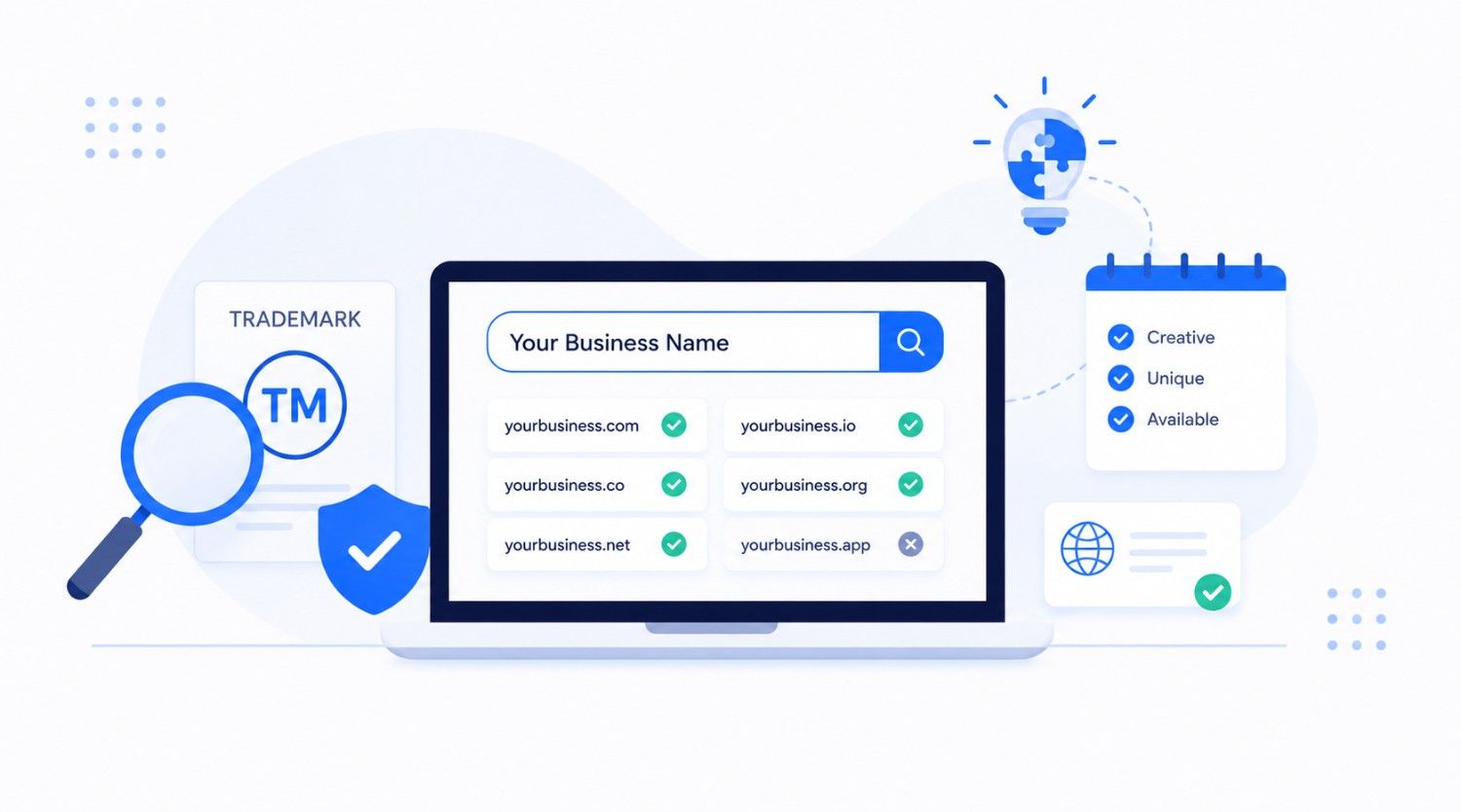
A business naming tool suggests brand names using keywords, industry, and tone as inputs, then narrows the list down using domain and trademark checks running quietly in the background. Some lean heavily on algorithms and spit out hundreds of options within seconds, while others blend automated suggestions with input from real copywriters.
Either way, the goal remains the same: a founder ends up with a shortlist of names that sound sharp, stay legally available, and are not already tied up in a dispute somewhere else. That last detail alone has saved plenty of entrepreneurs from an expensive rebrand a year or two later.
Why Should Entrepreneurs Use a Business Naming Tool?
Picking a name without any checks often ends in a clash with an existing trademark or a domain already claimed by someone in an entirely different industry. A naming tool identifies these issues early, preventing wasted investments in business cards, signage, or domain purchases.
It also opens up word combinations a founder might never have considered alone, since available extensions and phrasing are not always obvious from a manual brainstorm. For someone launching a first business, that mix of speed and reduced legal risk is difficult to replicate without a tool built for the task, though a lawyer or branding consultant remains the alternative for founders with bigger budgets.
Top 10 Business Naming Tools for Entrepreneurs
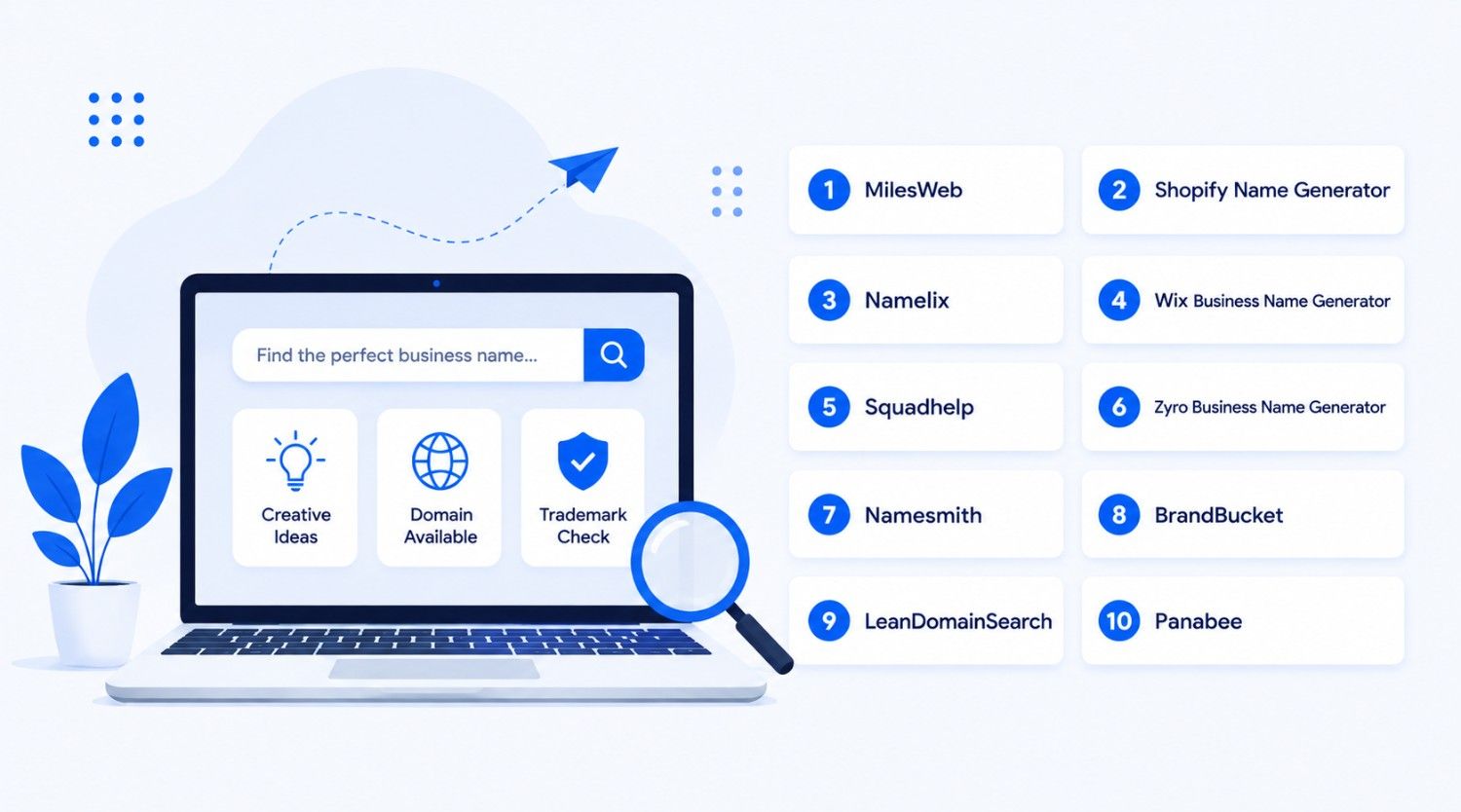
Budget, industry, and how much manual research a founder wants to do are all factors that determine which platform fits best. Here are ten worth a closer look.
1. MilesWeb
MilesWeb bundles a free business name generator with its hosting plans, letting a founder settle on a name and reserve the matching domain in a single step. Because everything runs through the same account, moving from name to a live website takes far fewer steps than managing separate services.
2. Shopify Name Generator
Retail founders lean on this one for short, memorable names built around product categories. A single keyword returns results within seconds, and each suggestion comes paired with an instant check on domain availability, removing the need for a separate search.
3. Namelix
Type in a couple of keywords, and the results arrive already paired with logo mockups, letting founders see a rough visual before committing time to a designer. Style and length filters trim a long list down within a few clicks, and more than a few users end up picking a name mostly because the matching logo looks right on screen.
4. Wix Business Name Generator
Wix keeps things simple: type a keyword, and the generator returns options alongside domain checks on the same screen. There is no separate step for verifying availability, which suits founders who want speed over a long list of alternatives.
5. Squadhelp
Rather than relying on algorithms alone, Squadhelp connects founders with a marketplace of professional namers and ongoing contests. Entrepreneurs who want a second opinion on tone and meaning, rather than a machine-generated list, tend to gravitate here.
6. Zyro Business Name Generator
Speed is the entire pitch here: one keyword in, dozens of options out, all within seconds. There is no logo preview or trademark screening involved, just a bare list built for founders who already know roughly what they want and need extra variations to pick from.
7. Namesmith
Namesmith leans toward short, catchy names that work well as a domain, rather than long descriptive phrases. A filter by extension narrows the list quickly, which is useful for a founder who already has .com or .co in mind and does not want to sift through unrelated endings.
8. BrandBucket
Instead of generating raw suggestions, BrandBucket operates as a marketplace: names are pre-registered as domains and bundled with a logo concept ready for purchase. A short description accompanies each listing, explaining what kind of business the name was built for, useful for a founder deciding between two or three finalists.
9. LeanDomainSearch
Enter one root word and the tool pairs it with a long list of common prefixes and suffixes, producing hundreds of domain-ready combinations at once. Even a broad, generic keyword returns something usable within a minute, and the plain, no-frills layout keeps the focus on the results instead of extra features nobody asked for.
10. Panabee
Panabee closes the list with app-friendly suggestions, useful for founders building both a website and a companion mobile app. Related domain availability appears next to every result, saving a second trip to check separately.
Concluding Insights
A strong name only marks the beginning of building a brand people remember, and the tools above make that early step far less overwhelming. After settling on a name and domain, founders can immediately build out their digital presence using structured AI website builder prompts before establishing a stable home for the website.
MilesWeb fits neatly into that next step, with plans that include free professional email addresses and daily backups alongside hosting. Paired with a name that fits the brand, a founder starts the next phase with far more confidence than guesswork alone would provide.
FAQs
1. What makes a good business name?
A good business name is simple, memorable, easy to pronounce, and relevant to your brand or industry. It should also have an available domain name and ideally not conflict with existing trademarks or established businesses.
2. Are business naming tools free to use?
Many business naming tools offer free name suggestions and basic domain availability checks. However, some platforms charge for advanced features such as trademark screening, premium domain names, logo design, or professional naming services.
3. Can a business naming tool guarantee trademark availability?
No. While some tools perform preliminary trademark checks, they cannot guarantee legal availability. Before registering your business, it’s advisable to conduct an official trademark search through your country’s trademark authority or consult a legal professional.
4. Should I check domain availability before finalizing a business name?
Yes. Securing a matching domain name helps create a consistent online presence and makes it easier for customers to find your business. It’s best to confirm domain availability before investing in branding materials.
5. What should I do after choosing a business name?
After selecting your business name, register the domain, verify trademark availability, secure your social media handles, and choose a reliable web hosting provider. These steps help establish a professional online presence and prepare your business for launch.
