

Quick Summary:
SEO for FMCG brands has evolved as discovery shifts from store shelves to search. Success now depends on capturing fast, high-intent queries in a competitive, multi-layered landscape dominated by retailers and aggregators. Winning brands prioritise non-branded, use-case keywords, create content that builds trust quickly, and maintain strong technical foundations across high-SKU websites. Organic visibility is no longer just about traffic but presence across snippets and AI results. Integrating SEO with paid and social channels strengthens performance. Ultimately, FMCG SEO is long-term infrastructure—compounding visibility, driving acquisition, and connecting search efforts directly to revenue through structured strategy and consistent optimisation.
Search has changed. The consumer hasn’t.
They still want the best shampoo for frizzy hair, the crispest biscuit, the protein bar that doesn’t taste like chalk. What’s changed is where they go to find it. Ten years ago, that discovery happened on a shelf. Today, it starts on Google — and increasingly, it starts before they even know they need something.
This is the reality FMCG search engine optimisation has to contend with. Not the sanitised version you read in generic marketing guides, but the messy, high-SKU, impulse-driven, retailer-dominated reality of selling fast-moving consumer goods in 2026.
So, if you are pondering over the best SEO strategy for ecommerce websites, here’s one thing you need to understand first. The brands getting this right aren’t the ones with the biggest paid search budgets. They’re the ones that understood early that organic visibility is an asset — one that compounds over time, doesn’t switch off when the ad spend stops, and reaches consumers at exactly the moment the decision is forming.
This blog breaks down what a structured FMCG SEO strategy actually looks like in practice — keyword architecture, content that does real work, technical foundations that hold under scale, and a measurement approach that connects rankings to revenue.
Why Retail Products SEO is a Different Ball-Game Altogether
Most SEO playbooks were written for B2B SaaS or service businesses. Long sales cycles, high-consideration decisions, and content designed to educate over weeks. None of that maps cleanly to FMCG.
A consumer buying a face wash doesn’t spend three weeks reading comparison articles. They Google “best face wash for oily skin,” scroll for twenty seconds, and click on whatever earns their confidence fastest. The window to capture that intent is narrow. The competition for that window is brutal.
What makes SEO for consumer goods companies particularly complex is the multi-layer competition. You’re not just competing against other brands. You’re competing against retail aggregators — Amazon, Nykaa, BigBasket, Blinkit — that often outrank brand websites for exact product searches. You’re competing against review platforms and listicles that dominate category terms. And in many cases, you’re competing against your own retail partner pages for branded keywords.
Layer on top of this the zero-click reality.
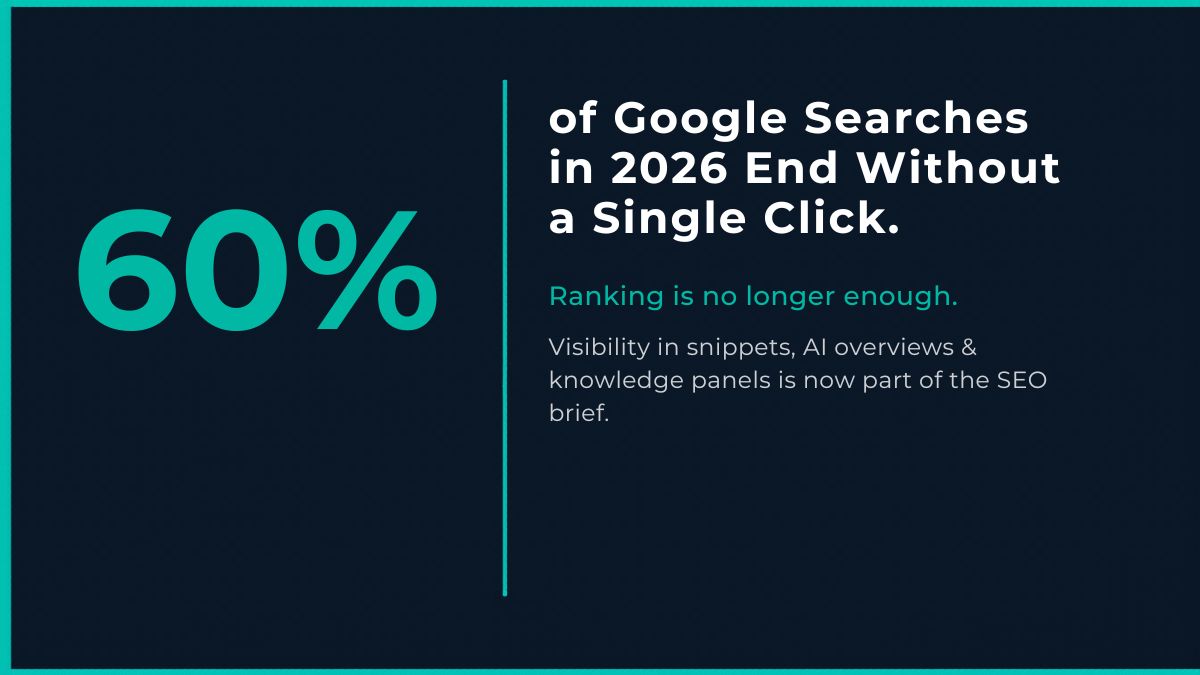
For consumer goods companies, this means organic visibility can no longer be measured by traffic alone — being present in featured snippets, AI overviews, and knowledge panels is now part of the same SEO brief. The brands that only optimise for clicks are optimising for a shrinking share of search.
Add to this the impulse purchase dynamic. A structured paid and organic social media strategy now feeds directly into the same discovery journey that Google sits at the centre of — reels, influencer content, and platform search generating branded and non-branded search queries that SEO has to be ready for. SEO that doesn’t account for this cross-channel reality is working with an incomplete map.
Paid search for consumer goods — PPC campaigns, shopping ads, Performance Max — gives you presence. But paid visibility stops the moment you stop funding it. SEO builds a foundation that keeps working. The brands winning on both fronts treat SEO and PPC management as an integrated system — paid accelerating what SEO is building, not substituting for it.
The companies building durable organic search visibility in this category are doing three things differently. They’re building keyword architecture around how buyers actually search — not around their internal product hierarchy. They’re producing content that earns trust fast rather than educates slowly. And they’re treating technical foundations as ongoing infrastructure, not a one-time project.
Keyword Architecture for Fast-Moving Consumer Goods
The most consequential SEO decision a consumer goods company makes is what it targets. And most get this badly wrong.
Keyword research for FMCG is not the same as for a B2B brand or a service business. The volume is higher, the competition is more layered, and the purchase-intent signals are more fragmented. They start with brand keywords — their product names, searches they would rank for anyway. Or they chase high-volume category terms so competitive that a mid-sized packaged goods company has no realistic path to the first page without years of domain authority building. Both approaches miss where the actual opportunity sits.
Branded vs Non-Branded: Getting the Balance Right
Branded keywords matter — but they’re not where new customers come from. Someone searching your product name by brand already knows you. Ranking for that term retains an existing customer. It doesn’t acquire a new one.
Non-branded category and ingredient searches are where acquisition happens. “Vitamin C serum for hyperpigmentation.” “Natural face wash under 300.” “Protein snack for office.” These are searches where the consumer has the problem but not the solution — and that’s where consumer goods companies have the most to gain.
Acquiring non-branded terms takes sustained domain authority. Pair content production directly with an off-page SEO link building guide to accelerate competitive rankings.
The balance that works for most packaged goods players: roughly 30% branded keyword focus, 70% non-branded category, ingredient, use-case, and comparison terms. The exact split depends on brand maturity and how much branded search volume already exists.
This is also where brand SERP management becomes relevant. What shows up when someone searches your company name is increasingly a signal of brand health — not just for consumers, but for Google. Top branding agencies in India now treat brand SERP ownership as part of their strategic remit, not a standalone exercise. A retail branding agency in India working on consumer goods identity has to think about how that identity translates into search — because a Google search is often the second touchpoint after a social media discovery moment. What the consumer finds when they search your name determines whether that discovery converts.
Use-Case and Intent-Based Keywords
This is the most underexploited layer of keyword strategy for packaged goods companies.
Occasion-driven searches. Ingredient-based searches. Problem-solution searches. “Healthy snack for school tiffin.” “Soap for hard water.” “Quick breakfast ideas under 5 minutes.” These keywords carry lower search volume than head terms but dramatically higher purchase intent — and they’re far easier to rank for.
The approach: map your product range against consumer moments and problems, not against product features. A biscuit brand isn’t selling biscuits. It’s selling a chai accompaniment, a travel snack, a child’s after-school treat. Each of those moments is a keyword cluster. Each keyword cluster is a content opportunity.
Long-tail and use-case keywords also tend to convert better because the search intent is precise. Someone searching “biscuit” wants information. Someone searching “low-sugar biscuit for diabetics” wants a product. Build for the second person.
PPC for consumer goods often reveals the highest-converting intent keywords faster than organic SEO can — run paid search campaigns in parallel and mine the search term reports for organic content opportunities. Paid vs organic strategy isn’t a binary choice for FMCG companies; it’s a research loop that feeds both channels simultaneously.
Local Search Opportunity
National consumer goods companies routinely underinvest in local SEO. That’s a mistake. Local SEO for consumer goods operates on a different logic than national category SEO — it captures buyers at the bottom of the funnel, at the moment they’re ready to act.
“Where to buy [brand] in New York.” “Natural soap near me.” “Best protein powder store in Pune.” These searches have purchase intent embedded in them — the consumer is ready to buy, they just need to know where to go.
Regional language variants of these queries compound the opportunity further.
For D2C consumer goods companies, local SEO means optimising for delivery area searches. For brands with retail distribution, it means Google Business Profile management, location pages for key markets, and regional keyword targeting. The Tier 2 and Tier 3 India opportunity in this space is significant — and most packaged goods manufacturers haven’t even started building for it.
Content and On-Page Strategy That Supports Organic Growth
Content for consumer goods categories isn’t about deep education. The buyer doesn’t have time for a 4,000-word guide. They need trust, fast — and they need to see themselves in the content. A content strategy for packaged goods has to be built around speed of conviction, not depth of explanation.
What Content Really Works for Everyday Products SEO
The content mix that consistently builds organic visibility for consumer goods companies: product-in-use formats, ingredient explainers, how-to and recipe-led content for food and personal care categories, occasion-driven posts, and comparison content for consideration-stage searches.
What doesn’t work is what most FMCG content teams produce by default — generic category articles that say nothing specific, product descriptions lifted from packaging, and blog posts designed to fill a content calendar rather than rank for anything.
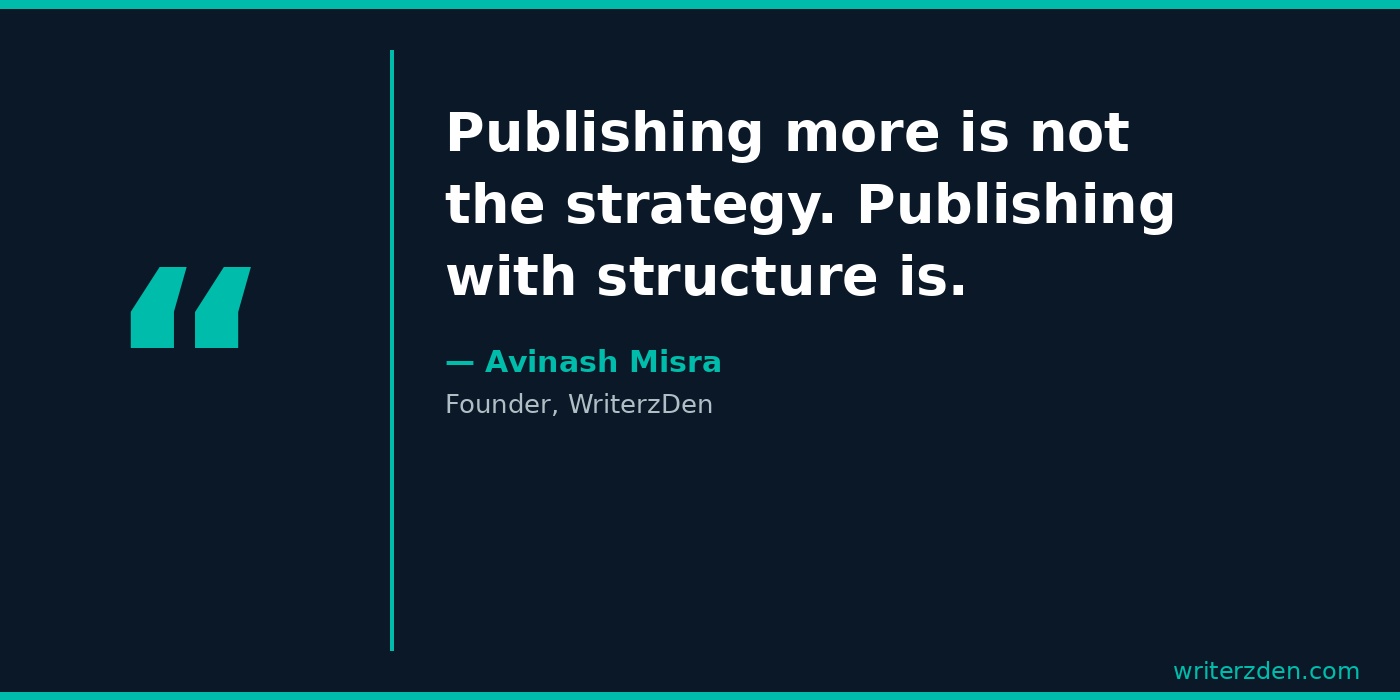
Pillar and cluster architecture changes this. Instead of publishing disconnected articles on loosely related topics, you build a topical authority structure — a central pillar page covering a broad category topic, with cluster content addressing specific questions and use-cases that link back to it. This is how consumer goods companies can compete with aggregator sites and review platforms on category terms — not by publishing more, but by publishing with more structural coherence.
User-generated content adds another dimension. Community-driven UGC campaigns — where real customers share product experiences, usage occasions, and outcomes — generate authentic long-tail content that organic search rewards precisely because it mirrors how people actually write search queries. Repurposing high-performing UGC into structured blog posts and landing pages is one of the most underused content-to-SEO loops available to consumer goods companies right now.
The other content frontier worth building for is AEO and GEO optimised content writing — as AI-powered search and answer engines increasingly surface direct responses, consumer goods companies that structure content around clear questions, schema markup, and entity-based SEO content will capture visibility that traditional keyword-only approaches miss entirely.
A word on content mistakes that quietly kill organic performance: thin product descriptions that duplicate manufacturer copy, category pages with no editorial content, blog content targeting keywords with no purchase intent, and generic copy that sounds identical across five competing brands. These aren’t just missed opportunities — they’re active signals to Google that the content doesn’t earn its ranking.
Product and Category Page Optimisation
This is where most consumer goods websites lose organic traffic before a visitor even arrives.
Product pages with one-line descriptions. Meta titles that just say the product name and SKU code. No structured data, no review schema, no FAQ schema. Category pages with zero editorial content — just a product grid. These are the default states for most FMCG websites, and they’re leaving enormous organic potential on the table.
A properly optimised product page for a consumer goods company includes: a keyword-rich meta title and description that leads with the primary use-case, not just the product name; a product description that addresses the buyer’s actual question rather than listing features; structured data (Product schema, Review schema, BreadcrumbList); and internal links to related products and relevant content. When implemented correctly, structured data also opens the door to featured snippet eligibility — a visibility layer most consumer goods product pages leave entirely unclaimed.
Category pages need editorial content above or below the product grid — at minimum 150-200 words that include the primary category keyword and supporting terms. This is what allows category pages to rank for head-term searches where buyer intent is still broad.
Image optimisation is routinely ignored in consumer goods. Product images are large files that slow page load significantly. Alt text is left blank or auto-generated. File names are camera roll codes. Each of these is both a technical SEO issue and a missed ranking opportunity for image search — which drives meaningful traffic in visual categories like food, beauty, and home products.
Technical SEO Realities for High-SKU Websites
Consumer goods websites carry a technical burden that most SEO guides don’t account for. Technical SEO for ecommerce and high-SKU consumer goods sites is a distinct discipline — the problems are different in scale and kind from what a 20-page B2B website faces.
Hundreds of SKUs. Frequent product launches and seasonal variants. Product pages that go out of stock and return. URL structures built by development teams with no SEO input. The result is a myriad of technical issues that quietly drain organic performance — often without anyone noticing until rankings have already dropped.
Three problems appear most consistently across FMCG websites:
- Duplicate content from SKU variations. A 200ml bottle and a 400ml bottle of the same product often get separate URLs with near-identical content. Google sees these as competing duplicate pages. The fix is canonical tags that consolidate link equity to the primary variant, plus meaningful content differentiation where variants genuinely differ in use-case or audience.
- Crawl budget waste. High-SKU sites with faceted navigation — filter by price, filter by skin type, filter by size — generate thousands of URL permutations that Google wastes crawl budget processing. Parameter handling in Google Search Console and judicious use of noindex on filtered pages keeps crawl budget focused on pages that matter.
- Core Web Vitals failures. Consumer goods sites are image-heavy by nature. Product photography, lifestyle imagery, hero banners. Without proper image compression, lazy loading, and next-gen format delivery (WebP over JPEG), these sites consistently fail on Largest Contentful Paint — a Core Web Vitals metric that directly influences rankings.
Mobile-first indexing is the other reality consumer goods SEO can’t ignore. The majority of FMCG product searches happen on mobile — often in-store, at the moment of purchase decision. A site that renders poorly on mobile isn’t just a bad user experience; it’s a ranking disadvantage. Going back to the drawing board on mobile UX is worth it if the current state is broken.
Technical SEO for packaged goods companies isn’t glamorous. But it is the foundation that everything else — keyword strategy, content, link building — depends on to perform.
Measuring SEO Performance for FMCG Businesses
Organic traffic is a vanity metric on its own. If 50,000 people arrive on a blog post about healthy breakfast ideas and none click through to a product, that traffic isn’t contributing to revenue. The question isn’t how many people are finding you — it’s whether the right people are finding you at the right moment.
The measurement framework that actually tells you whether SEO is working for a consumer goods company:
- Non-branded organic traffic share. What percentage of your organic traffic comes from people who didn’t already know your brand? This is the acquisition signal. If non-branded organic traffic is growing, SEO is working. If it’s flat while overall organic traffic rises, you’re getting better at retaining people who already know you — not acquiring new ones.
- Category keyword rankings. Track rankings not just for target keywords but for the top 20-30 category and use-case terms across your product space. Share of voice within your category is a more meaningful indicator of organic health than individual keyword positions.
- Traffic-to-product-page conversion rate. How much of your organic traffic is reaching product pages versus editorial content? And of those landing on product pages, what percentage is adding to cart? This is where the SEO-to-revenue connection becomes visible.
- Branded search volume lift. As SEO and content activity increases, branded search volume should grow too — because organic discovery builds brand awareness that eventually converts into direct searches. This is the long-game signal that SEO is building brand equity, not just rankings.
- Performance marketing and SEO integration. For consumer goods companies running both PPC and organic campaigns, track assisted conversions from organic separately. A consumer who discovered you through a blog post, left, and returned via paid retargeting was still first touched by SEO — blending all of that into a single attribution number hides what’s actually driving growth. The brands with the clearest picture of performance are the ones that have built measurement infrastructure across both channels.
The bottomline: ROAS from paid campaigns is easy to read. SEO ROI is slower to appear but more durable. The brands that measure both with discipline make smarter allocation decisions — and stop treating SEO as a cost to justify and start treating it as an asset to build.
Struggling to Build Organic Visibility for Your FMCG Brand?
Our SEO experts work with consumer-focused brands to improve search visibility, capture high-intent demand, and drive consistent conversions. From keyword strategy to technical SEO, our team builds systems that turn organic traffic into measurable growth.
Conclusion
SEO for consumer goods companies isn’t a campaign with a start and end date. It’s infrastructure.
Every optimised product page, every category term you rank for, every piece of content that earns a featured snippet — these compound into an organic search visibility asset that a paid budget cannot replicate and a competitor cannot switch off.
The brands building this now — the ones treating keyword architecture, content structure, and technical foundations as ongoing investments — are accumulating an advantage that will be very difficult to close for players who waited.
Where do you start? With an honest audit of where your organic presence actually stands — what you’re ranking for, what you’re missing, what’s technically broken. Most consumer goods companies discover that the gap between where they are and where they could be is significant, and that the fixes aren’t as complex as they assumed. Any experienced SEO agency in India working in the consumer goods space will tell you the same thing: the biggest wins are usually sitting in plain sight.
If you’re at the stage of evaluating who to work with, spending time shortlisting FMCG marketing agencies in India that understand category-specific SEO is a decision worth making carefully. The right partner changes the trajectory. The wrong one costs more than time.
About WriterzDen
WriterzDen is widely regarded as the best digital marketing agency in Ahmedabad, India, helping consumer-focused brands build organic visibility that compounds over time.
Our approach combines content architecture and topical authority building with deep technical SEO—crawl optimisation, Core Web Vitals, schema, and structured data. Everything is structured around real search intent and built for the full search ecosystem, from featured snippets to AI overviews.
We focus on creating scalable organic growth by aligning site structure, content depth, and technical foundations—turning search visibility into a long-term acquisition channel rather than a short-term tactic.
Frequently Asked Questions
How is SEO for FMCG different from general SEO?
The core difference is purchase cycle and competition structure. General SEO often deals with high-consideration decisions where content can educate over weeks. Consumer goods SEO has to capture intent in seconds — and compete not just against rival brands but against retail aggregators, review platforms, and sometimes the brand’s own distribution partners, all competing for the same search real estate.
How long does it take for consumer goods SEO to show results?
Non-branded category keywords typically take 4-8 months to show meaningful movement for a mid-sized brand with a reasonably established domain. Product and branded keywords move faster. Technical fixes — resolving duplicate content, improving Core Web Vitals — can show ranking improvements within 6-12 weeks. SEO is not a short game, but early wins are achievable with the right prioritisation.
Should D2C retail consumer products businesses invest in local SEO?
Yes — particularly for delivery area targeting, where-to-buy queries, and regional language searches. A D2C SEO strategy for India has to account for the fact that local intent searches consistently carry higher purchase intent than generic category searches. A consumer searching for protein powder delivery in a specific city is far closer to a purchase than someone searching a generic category term — and that gap is where D2C companies consistently win organic ground.
What content formats work best for FMCG organic search?
Use-case and occasion-driven content, ingredient explainers, comparison content, and how-to formats for food and personal care categories. These address specific search intent and convert better than generic brand content. The other non-negotiable: product and category page content that goes beyond feature lists and addresses the actual buyer decision.
Can a mid-sized consumer goods company compete with established players through SEO?
Yes — on the right terms. Competing head-to-head on broad category head terms against market leaders with years of domain authority is a losing strategy. The viable path is use-case, ingredient, and occasion-based long-tail keywords where purchase intent is high and competition is lower. Working with an SEO marketing agency in India that understands the consumer goods landscape means you’re building topical authority in specific niches — a particular ingredient, a particular usage occasion — where mid-sized players can win and compound from there.
