

Every founder hiring a digital marketing company in India starts the same way: a search bar, a screen full of listicles, and a dozen open tabs that all recommend the same five names. Simply type a search phrase to find the top marketing companies in India, and the results read like an echo chamber — rankings built by the same service providers they’re ranking, dressed up as objective research. None of it tells you which firm is actually right for your business, only which one worked hardest to be found.
A shortlist is the easy part. So is comparing digital marketing packages in India when the comparison stops at services, deliverables and price.
Knowing what separates a capable marketing company from a merely persuasive one takes real agency selection criteria, and that’s exactly what the ten checks below are built to give you. They apply to WriterzDen as fully as to anyone else — we’d rather you use them than take our word for it.
Who this guide is for: founders, business owners and marketing heads at Indian small and mid-sized companies looking to partner with an online marketing service provider for the first time, or replacing one, and want to compare options without a marketing background of their own. It sticks to the questions you can actually ask on a first call, and leaves the tool settings to the specialists.
The care is worth it because of where responsibility sits. Google’s guidance on hiring an SEO states that the business remains answerable for the actions of any company it hires, and deceptive content produced on its behalf could get the site dropped from Google’s index entirely. Choosing an agency is a risk decision as much as a purchase.
1. Start with the business problem, then decide what kind of agency fits
- “We need SEO,” “we need a social media marketing agency,” or “we need a Facebook and Instagram ads agency” describe activities. “Enquiries arrive but few of them are qualified,” “nobody outside our city knows us,” and “customers can’t find us when they ask an AI assistant a question” describe problems, and each calls for different digital marketing services, a different budget and a different timeline.
- A brief written around the problem also shows quickly whether a prospective marketing partner asks useful questions or simply matches the request to a package.
- The prior question is whether an agency is needed at all. Google’s own guidance says a small local business can probably do much of the work itself. The point where an in-house marketing team runs out of capacity tends to show up in the signs that an in-house team has stopped being enough.
- Multi-channel service provider agencies that bundle SEO, performance marketing, social media, branding and web development often have one or two lines that carry the rest, so it’s worth asking which of them brings in the renewals. A social media marketing company in India, for example, is often the line that gets a business through the door, with SEO or performance marketing folding in later as trust builds.
- A content gap shows up the same way. When there’s no steady flow of client-ready blogs, case studies or website copy, dedicated content writing services tend to close that gap faster than a generalist agency picking it up as an afterthought.
- When the need is narrow, as with earning media coverage through digital PR, the evaluation changes again. There’s a separate view of how to choose a digital PR agency.
Before the first call, write these four things down
Writing down these crucial things will turn a vague brief into something an agency can be held to.
| Write down | Why it matters |
| The problem in one sentence, for example “enquiries come in, but few turn into sales” | It shows whether the agency asks about the business or simply pitches a package |
| Current numbers: enquiries a month, how many become sales, average order value | Without a starting point, no result can be measured or claimed later |
| Monthly budget, with the agency fee and the ad spend kept separate, and how long the business can wait for results | It decides which services are realistic: a short runway favours paid campaigns, while organic work usually needs longer |
| Who on the team will approve work and report back on lead quality | Campaigns can only be tuned toward good leads if someone tells the agency which leads were good |
2. Match the agency to the sales cycle, not only the sector
- Google’s suggested interview questions include experience in the client’s industry and in its country or city. The sector question matters mainly for what it says about the sales cycle.
- A B2B manufacturer waiting on a request for quotation and a consumer brand chasing repeat purchases judge a good month differently. The mechanics of the first are laid out in building an inbound RFQ engine for B2B manufacturers.
- An agency whose experience is short-cycle e-commerce may read three quiet months as a failing campaign when the cycle is simply longer.
- Two references with a comparable sales cycle and order value are worth requesting, and Google likewise recommends checking business references.
- Percentage gains in case studies deserve caution until a baseline and a time frame accompany them. For illustration, a 300 percent rise from three enquiries a month is twelve enquiries a month.
3. Read badges, awards and rankings for what they prove
| Signal | What it tells you | What it cannot tell you |
| Platform badges and certifications | The agency has met that programme’s criteria, such as training or ad-spend levels | Whether a client’s sales grew |
| Awards | The awarding body chose to recognise the agency | Results in a client’s own figures |
| “Top 10” and roundup pages | Someone chose to feature the agency, and the publisher may have its own interests | Fit with a specific business |
| Client references | How the agency behaves as a partner, when the client has a comparable sales cycle | Very little, unless the business calls them and asks about results |
- The more useful request is for what a credential cannot show: results in the client’s own figures, such as cost per qualified lead, revenue by channel or retention, from an account the agency has run for at least a year.
- Badges, awards and rankings are worth noting, but they are marketing signals about the agency. The proof is what clients say when asked directly.
4. Make sure the business owns its ad accounts and data
- The safest arrangement is for ad accounts to sit in the business’s name, with the agency added as a partner, so the business can remove access without losing anything.
- Google Ads works against this by default. An account created through an agency’s manager account belongs to the agency, while an existing account that the agency merely links does not.
- Meta uses a partner model. Business Manager lets a business give a partner agency access to its assets, which suits a business hiring a social advertising agency for Meta to run Facebook and Instagram campaigns. The same ownership principle carries across other social media advertising platforms too — LinkedIn Campaign Manager and X Ads use comparable partner-access setups.
| Item | Should sit with | Ask the agency |
| Google Ads and Meta ad accounts | The business, with the agency added as a partner | Will the accounts be created under our email? |
| Website analytics and tag manager | The business | Will we have admin access from day one? |
| Domain, hosting and website logins | The business | Who holds the logins today? |
| Ad creatives and content files | The business, handed over at exit | What do we receive if we leave? |
| Payment method for ad platforms | The business’s own card or billing profile | Where is ad spend billed? |
- The contract should say which assets belong to the client, what is handed over at exit and within how many days.
5. Agree what counts as a result, and whose numbers decide it
- For lead generation, a form submission is an event and a qualified lead is a business outcome. Reporting that stops at the first will always look healthier than the second. This matters most when hiring a performance marketing agency, because its work is judged on leads and cost per lead.
- Connecting campaign data to the sales team’s records lets cost per lead be restated as cost per qualified lead or cost per sale, provided a baseline is recorded before work starts.
- The balance between awareness and demand targets belongs in the same conversation, because weighing brand awareness against lead generation determines which metrics the agency will be judged on.
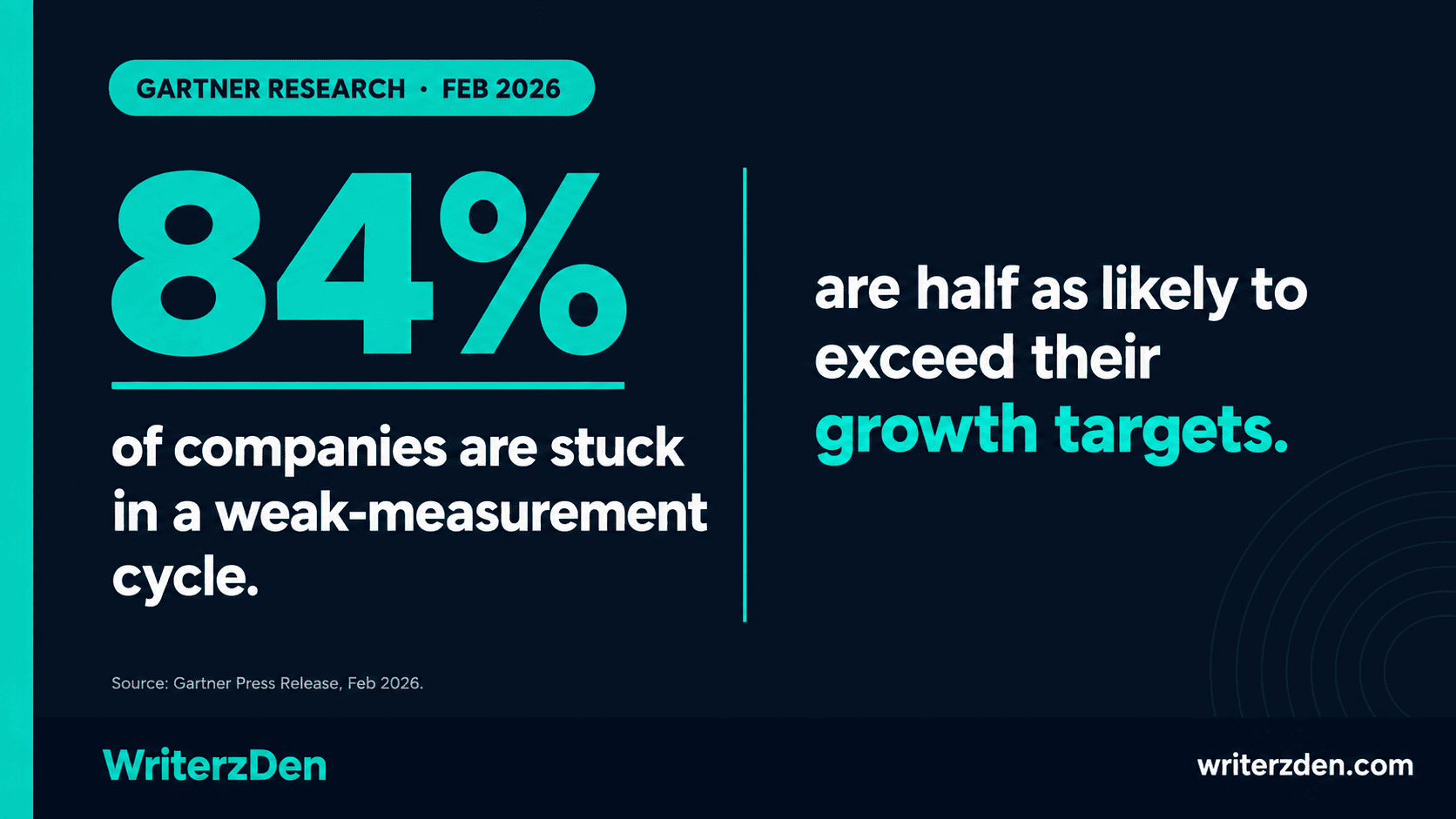
Source: Gartner Research
- Different tools show different numbers for the same campaign, and the reason usually comes down to attribution: which touchpoint gets credit for a conversion, and over what time window. Analytics tools such as GA4 let users set their own attribution model and lookback window, and ad platforms report against their own settings. Figures from an ad platform, website analytics and the sales team will therefore often disagree without anyone having made an error.
- An agency that names the source of truth in advance, and can explain the gaps, prevents the argument in month three. The sales team’s own record of qualified leads and sales is the natural candidate.
- A five-step approach to this problem is set out in fixing attribution in performance marketing.
Ready to Choose the Right Agency?
Get a practical digital marketing strategy built around your goals, budget and growth targets.
6. Insist on reporting that someone else can audit
- Monthly PDFs are easy for an agency to produce and hard for you to verify. Live dashboard access or raw exports let someone in the business, or a future agency, check figures against platform invoices.
- Reports that open with impressions, reach or follower counts and put leads on a later page merit questions, particularly when the brief was lead generation.
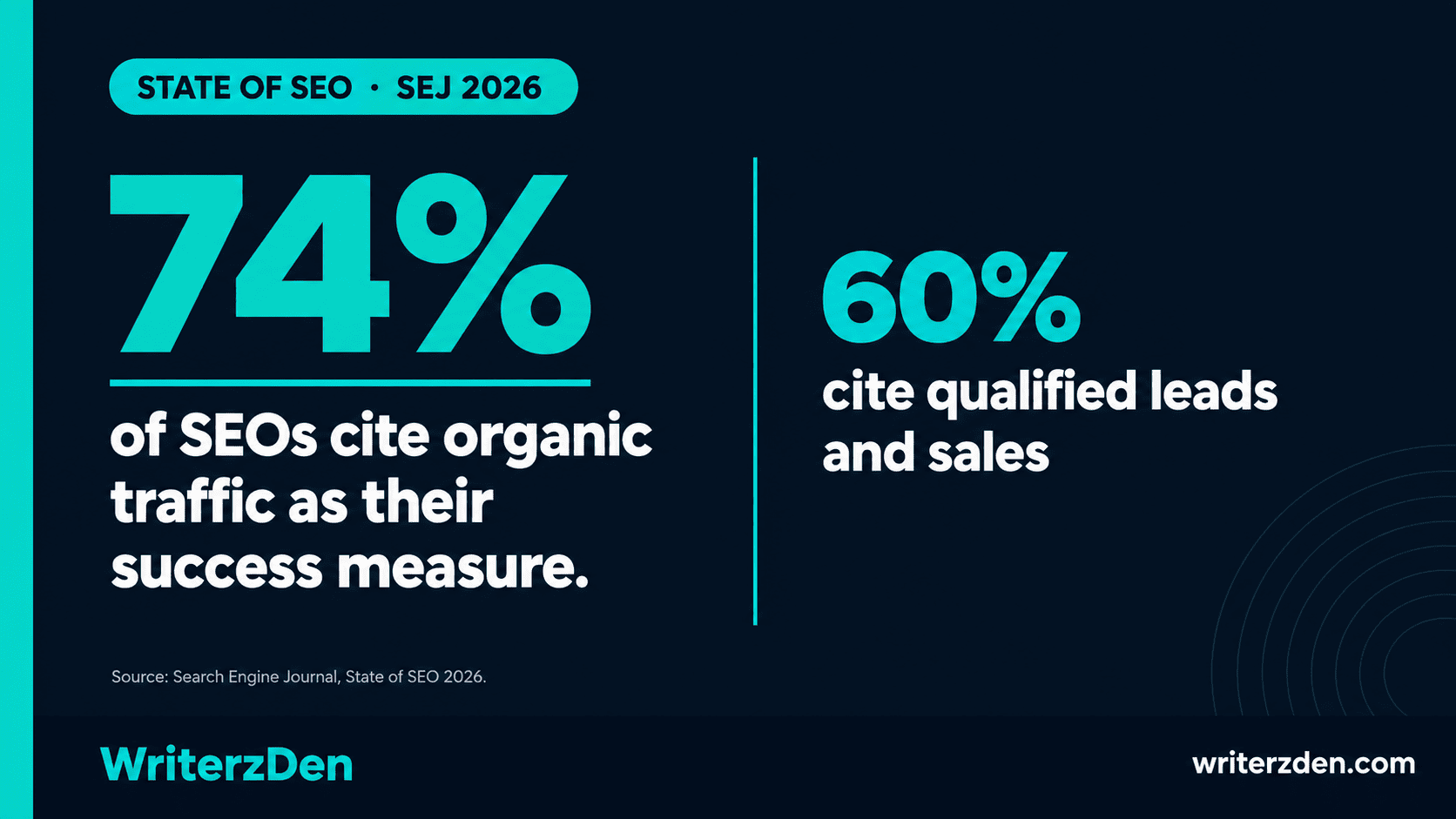
Source: Search Engine Land- The State of SEO 2026
- A useful report explains what changed, why, and what happens next, including in months when results fell.
- A redacted sample from an existing client, requested before signing, shows how the agency thinks about accountability more reliably than a pitch does.
- The reported ad spend should also reconcile with what the platform billed, with the agency fee and the media budget on separate lines.
7. Understand what the fee model rewards
Compare digital marketing services packages by scope rather than by the number of services listed.
| Fee model | What it rewards | Watch for |
| Retainer | Predictable cost | Weak incentive if the scope is loose |
| Percentage of ad spend | Higher budgets, whether or not efficiency improves | Revenue for the agency rising with spend |
| Performance-linked pay | Agreed outcomes | Depends entirely on the result-counting rules from the previous point |
- None is wrong. The choice should match how much risk the business is willing to carry.
- Whichever model is chosen, ask the agency to show marketing ROI the way your finance team would: revenue or qualified leads set against total cost, agency fee included, not just against ad spend.
- The terms worth reading beyond the model are the minimum term and notice period, what the fee includes (creative, landing pages, reporting) and what triggers extra charges, where ad spend is billed, and whether quotes include GST.
- Budget leakage often starts with undefined objectives and broad targeting, both covered in six reasons paid ad budgets get wasted. A scope of work should name the objectives the fee is buying.
8. Meet the people who will do the work
- Discovery calls are commonly led by senior people, with day-to-day work passing to a smaller team afterwards.
- The person who will build the campaigns and the person who will explain results should both join a call before signing.
- How long each has been at the agency, how many accounts each handles and what happens if one leaves are all reasonable things to ask.
- If Meta advertising or other social media advertising is part of the scope, it’s worth asking whether it’s run by the same generalist handling everything else, or by a dedicated paid social agency for Meta platforms within the team. Platform depth tends to show once campaigns are live.
- Subcontracting deserves the same directness. White-label arrangements are common and legitimate, but the business should know who has access to its accounts and data.
- Google’s interview list for SEO applies to every channel, since it asks whether the provider will share every change made and explain the reasoning behind each recommendation.
9. Be careful with promises about rankings and AI visibility
Whether you’re hiring an SEO agency in India or a full-service digital marketing partner, this is where the boldest promises tend to show up, especially around what’s now called AI visibility: whether a brand gets mentioned or cited inside AI-generated answers, not just where it ranks on a results page.
| What you may hear | What to know |
| “We guarantee a number-one ranking on Google” | Google says no one can guarantee this |
| “We have a special relationship with Google” or “a priority submission route” | Google says to avoid firms that make these claims |
| “AI search needs a separate package” | Google’s guidance says optimizing for AI features in search is still SEO, so ask what exactly the agency does differently |
| “Special files, or rewriting your pages into small chunks, will get you into AI answers” | Google lists these among tactics that can be ignored for Google Search |
- That guidance speaks only for Google. For tactics aimed at other AI assistants, the fair question is what evidence supports them and who measured it.
- Google’s Search Console now includes a generative AI performance report, so part of this can be checked in the business’s own data.
- Pew Research Center’s study of 900 US adults found clicks on conventional results in 8 percent of visits with an AI summary against 15 percent without one. That’s an association from US browsing in March 2025, neither proof of cause nor a measure of India, but it explains why website visits alone may understate visibility.
- Content built with that in mind, structured clearly enough for an AI system to summarise and cite correctly, is sometimes sold as AEO or GEO-ready writing, though the underlying skill is still ordinary: answer the question directly, and back it with sources worth citing.
- An SEO company in India should be able to report how often the site appears for commercial searches, where it ranks and how many leads follow, all in one place. The wider shift is examined in how search visibility is changing as website traffic declines.
Tired of Bold Claims and Unclear Results?
Work with a transparent partner who shows real data, clear reporting and measurable outcomes.
10. Ask how the agency handles customer data and ad claims
| Area | What to know | What to ask |
| Customer and lead data | Under India’s DPDP Act, the business remains responsible for personal data even when an agency handles it, and may involve an outside processor only under a valid contract | Where is our lead data stored, who can see it, and how is it deleted when we leave? |
| Timing | The DPDP Rules were notified in November 2025 with an eighteen-month phase-in, which puts the main obligations around May 2027, inside the life of a contract signed now | Does the contract already include data-protection terms? |
| Advertising claims | The Central Consumer Protection Authority’s 2022 guidelines set duties for advertisers and advertising agencies, with penalties of up to ₹10 lakh on manufacturers, advertisers and endorsers, rising to ₹50 lakh for repeat contraventions | Who checks claims and influencer disclosures before ads go live? |
- An agency that manages enquiry forms, lead lists or customer records is likely handling personal data on the business’s behalf.
- A quick lawyer’s review of the contract is worth the fee here, especially if this is the first time the business is handing customer data to an outside partner.
Conclusion – 10 questions to put to every agency
| Check | Question |
| 1. Problem fit | Which two services account for most of your client renewals, and who leads each? |
| 2. Sales cycle | Which clients with a similar sales cycle and order value can I call? |
| 3. Proof | Which of your results can I verify by speaking to the client, in the client’s own figures? |
| 4. Ownership | Will ad accounts sit under our business, with your team as a linked partner? |
| 5. Results | Whose numbers decide whether a lead counts: the ad platform’s or our sales team’s? |
| 6. Reporting | Can I see a redacted client report and get live dashboard access? |
| 7. Fees | Where is ad spend billed, and what would leaving at month six involve? |
| 8. People | Who will build our campaigns, and can we speak to them before signing? |
| 9. Search claims | Which promises do you make about rankings or AI visibility, and what evidence backs them? |
| 10. Compliance | Who signs off on ad claims, and how is lead data stored and deleted? |
Turning the checks into a decision
- Send these in writing to two or three agencies you’re considering, and compare the answers side by side. It tells you more than another round of meetings will.
- A paid audit or a pilot of 60 to 90 days produces better evidence than any pitch, provided it starts with a written growth marketing strategy, a recorded baseline, access set up in the business’s name and exit terms agreed in advance.
- As a tiebreaker, the agency that welcomes this level of scrutiny, rather than bristling at it, has already answered several of the questions above — and that alone tells you something.
FAQs
1. Can a digital marketing services company in India guarantee first-page rankings?
No. Google states that no one can guarantee a number-one ranking and advises avoiding firms that claim a special relationship with Google or a priority submission route. A trustworthy agency instead explains the expected time frame and how success will be measured, including for newer goals like AI visibility.
2. How can I check an agency’s case studies and results?
Ask for the baseline, the time frame and results in the client’s own figures, then speak to that client. Choose references with a similar sales cycle and order value, as Google also recommends checking business references. Percentage gains without a starting number say little.
3. Is a retainer or a percentage of ad spend the better fee model?
A retainer keeps cost predictable but can weaken incentive if scope is loose. A percentage of ad spend raises agency revenue whenever budgets rise, efficient or not. Performance-linked pay depends on agreed attribution rules. Keep the fee and the media budget on separate lines whichever model is chosen.
4. When does a business need a full-service digital marketing company instead of an in-house marketing team?
When workload, specialist skills or campaign volume outgrow the in-house team. Google notes that a small local business can probably do much of its own SEO. One workable split keeps strategy and account ownership in-house while an agency handles specialist execution.
5. What data-protection duties apply when a marketing agency handles my leads?
Under India’s DPDP Act, the business stays responsible for personal data even when an agency handles it, and may involve an outside processor only under a valid contract. The Rules’ main obligations phase in around May 2027. Put storage, access and deletion terms into the agency contract now.
About WriterzDen
WriterzDen is a digital marketing agency in India, established in 2014 in Ahmedabad (Gujarat). Over 12 years, the team has worked with 300+ brands across India, the US, UK, UAE, Canada and Australia, so campaigns start from playbooks already tested across sectors and sales cycles. Services span SEO, performance marketing, Meta ads management, content marketing and white-label digital marketing, planned around customer acquisition cost and qualified leads rather than impressions.
Make Your Next Agency Decision Count
Get expert guidance on strategy, pricing, reporting and performance before you commit.
