

Quick Summary: Most businesses running paid ads have no idea about the mistakes they make. This blog breaks down the six most common reasons paid ad campaigns underperform, from undefined campaign objectives and broad audience targeting to creative fatigue and landing page disconnect. It then covers what structured PPC (Pay-Per-Click) campaign management looks like in practice, how Google Ads and Meta advertising waste budget differently, and the five questions every business should ask before trusting an agency with their paid media spend.
Badly managed paid ad campaigns waste between 70 and 80 percent of budget. Well-run ones still lose 10 to 20 percent without the right structure in place. Most businesses running ads in India don’t know which category they fall into — because the agency report they receive every month is filled with clicks, impressions, and reach figures that say nothing about what those numbers cost per actual lead.
The problem is rarely the platform. Google Ads works. Meta Ads work. What doesn’t work is launching campaigns without defined objectives, running the same creative for three months, and reporting on vanity metrics while the actual paid advertising mistakes compound quietly in the background.
This blog breaks down the six most consistent reasons paid ad budgets get wasted, what a conversion-focused campaign structure actually looks like in practice, and the five questions every business should be asking before they allocate another rupee to paid media.
6 Reasons Paid Ad Budgets Get Wasted
These aren’t hypothetical mistakes. They appear in nearly every campaign audit we run — across industries, budgets, and platforms.
1. No Campaign Objective Defined Before the Budget Is Set
The most expensive mistake in paid advertising happens before the campaign goes live. When a business hasn’t defined whether a campaign is built for brand awareness or direct response — every subsequent decision is made without a reference point. Awareness budgets get deployed against a sales objective. Lead generation campaigns run without conversion tracking. The result is wasted ad spend that’s impossible to attribute because no one agreed on what success looked like before the spend started.
2. Audience Targeting That’s Too Broad and Never Refined
Broad audience targeting is the fastest way to burn budget on people who were never going to convert.
When campaigns run without audience segmentation — no demographic filtering, no interest layering, no exclusion lists — ads appear in front of users with no intent and no commercial relationship with the business.
On Google Ads specifically, this plays out through keyword match types:
No negative keyword lists — broad match allows ads to trigger on searches that sound related but have zero buyer intent. A brand selling industrial fasteners running broad match on “bolts” will serve ads to people searching for Usain Bolt, bolt-action rifles, and how to bolt furniture to a wall.
No audience exclusions — past converters, irrelevant geographies, and low-intent demographics keep seeing the ads and burning impressions that cost money without producing pipeline.
Every irrelevant click is a rupee that didn’t need to be spent. Multiply that across a month of unmonitored broad match campaigns and the waste is rarely visible in the dashboard — which is exactly why it keeps happening.
3. Vanity Metrics Reported Instead of Revenue Metrics
Reach, impressions, and click-through rate are easy numbers to improve and easy numbers to put in a report. They’re also insufficient on their own as indicators of whether a campaign is producing commercial results.
A campaign that reached 500,000 people and generated a 4% CTR looks successful on paper. If none of those clicks converted into leads or purchases, the campaign failed — and the report hid it.
The metrics that matter for paid campaigns are cost per lead, cost per acquisition, return on ad spend, and ROAS by campaign and audience segment. Everything else is supporting data, not the headline number.
4. Landing Page Disconnect
An ad makes a specific promise. A landing page that delivers something different breaks that promise at the exact moment a visitor is closest to converting.
The three mismatches that kill conversions most often:
Sending ad traffic to the homepage — no context, no continuation of the ad’s message, no clear next step. The visitor arrived with intent and left with confusion.
Generic product pages with no ad relevance — the ad said “50% off industrial packaging this week.” The page shows the full product catalogue. The offer disappears. So does the buyer.
Contact forms with no supporting content — asking someone to fill in their details before they’ve seen enough to trust you is the fastest way to get a bounce and a wasted click.
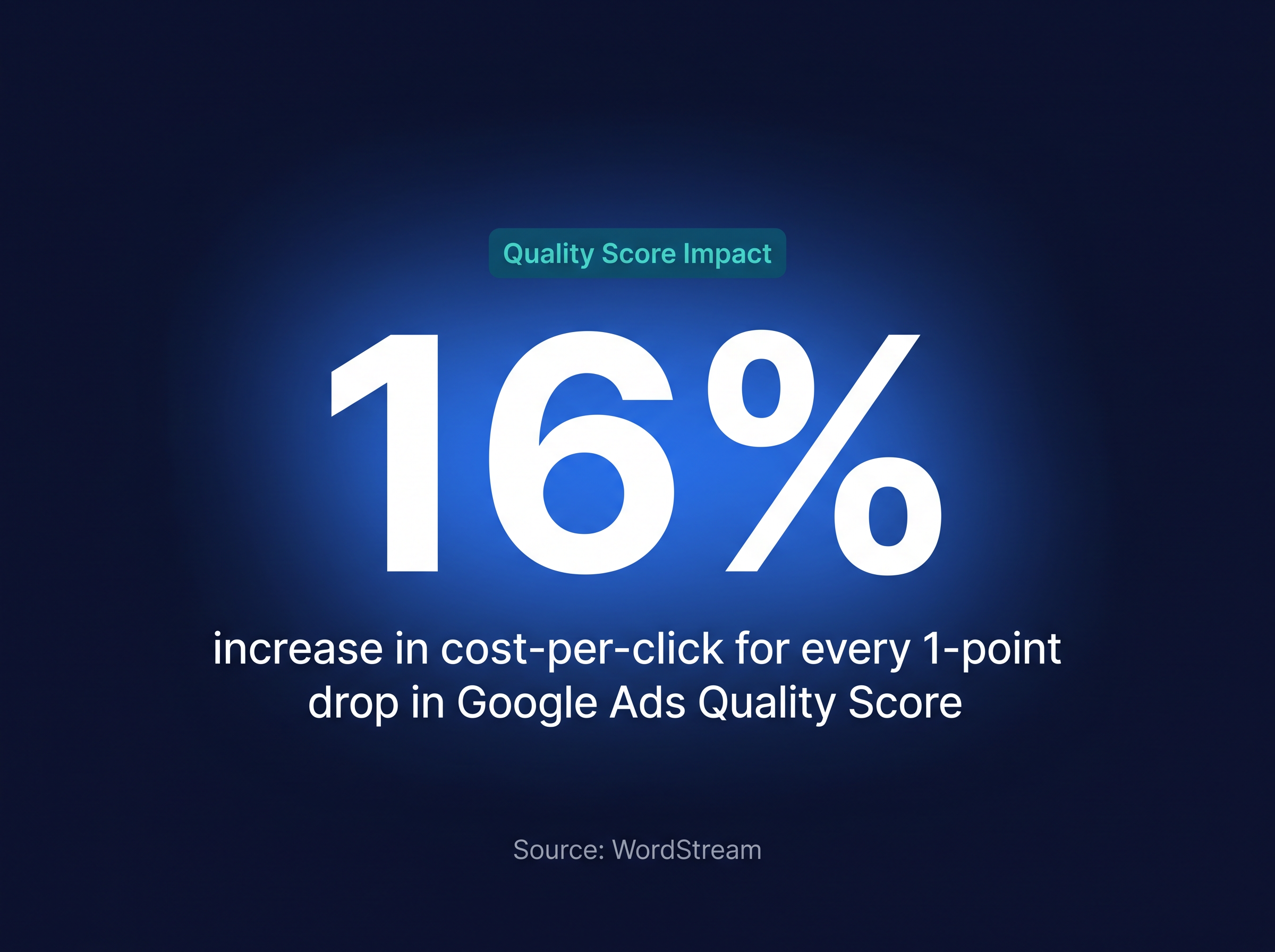
Paid campaign optimisation isn’t just about the ad. The landing page is part of the campaign architecture. Ad platforms factor landing page relevance directly into quality scores and cost-per-click — a poor relevance score means you’re paying more per click and converting less. Both at once.
5. No Retargeting Structure
Cold audience campaigns generate awareness. Retargeting campaigns generate conversions. Running paid media spend entirely on cold audiences — without a mid-funnel layer targeting people who’ve already engaged with your brand — is the structural equivalent of introducing yourself to someone and never following up. Most B2B and considered-purchase B2C buyers need four to seven touchpoints before they convert. A paid campaign without retargeting architecture spends all of its budget on the first touchpoint and abandons the buyer before the decision is made.
6. Creative Fatigue Left Unaddressed
Ad creative has a lifespan. On Meta platforms, audiences in a defined targeting segment typically exhaust creative relevance within 7 to 14 days of consistent exposure.
When the same creative runs for 60 days without rotation or A/B testing, CTR drops, cost-per-click rises, and the algorithm starts deprioritising the ad — all while the budget continues at the same rate. Proper performance marketing services build creative rotation into campaign management as standard practice — not as a reactive fix when numbers are already declining.
The platforms aren’t wasting your budget. The absence of a structured campaign management system is–
Avi Misra (Founder of WriterzDen)
What Proper Campaign Management Actually Looks Like
Campaign management services that produce consistent results operate differently from campaigns that are set up and monitored monthly. The difference is visible in the operating structure — not in the platform, the budget size, or the industry.
That operating structure also depends on choosing the right marketing partner. Comparing digital marketing service providers in India can help businesses assess whether an agency has the expertise to connect paid campaigns with audience targeting, conversion optimisation, and broader acquisition goals, rather than treating ad management as an isolated activity.
– Objectives Mapped to Funnel Stage Before Spend Is Allocated
Every campaign in a structured paid digital marketing plan has a defined role in the buyer journey. Top-of-funnel campaigns build audience familiarity — short-form video, reach-optimised creatives, broad-intent content.
Mid-funnel campaigns target engaged audiences — people who watched 50% of a video, visited a product page, or interacted with a previous ad — with more specific product content and comparison angles.
Bottom-of-funnel campaigns target high-intent audiences — cart abandoners, past buyers, people who spent meaningful time on a landing page — with offers, urgency, and direct purchase prompts.
Running all three simultaneously with separate budgets and separate creative sets is what makes paid campaign performance readable and scalable.
– Audience Segmentation Built Before the First Ad Goes Live
A structured campaign starts with audience architecture — three distinct segments built and populated before any spend is deployed.
- Cold audiences — defined by demographic, interest, and behavioural data. These people have never interacted with your brand. They need familiarity-building creative, not a hard sell.
- Warm audiences — pixel-based, built from website visitors, video viewers, and social media engagers. They know you exist. The creative job here is to deepen consideration.
- Retargeting audiences — the highest-value segment. People who have already demonstrated intent — visited a product page, started a checkout, spent meaningful time on a landing page. These are your closest converters.
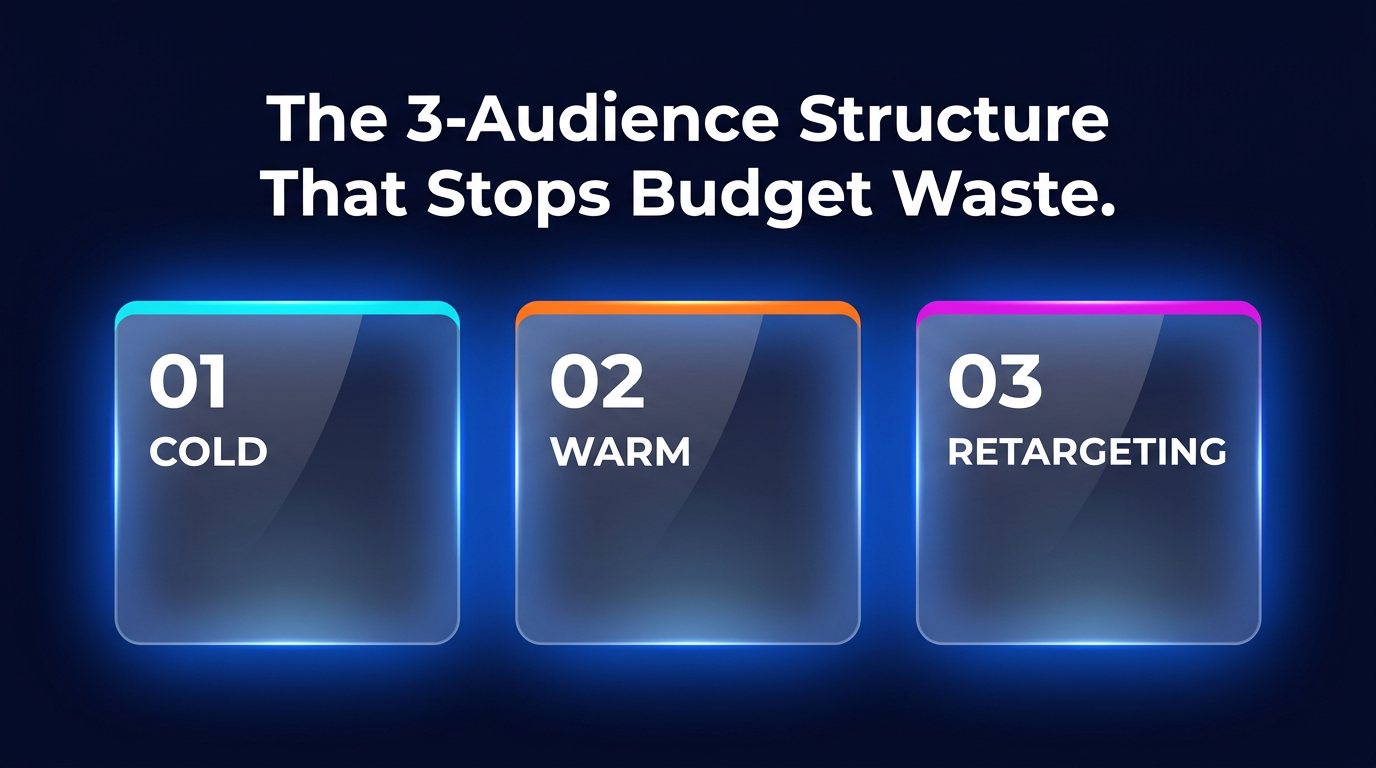
Each segment gets different creative, different messaging, and a different call to action. Mixing all three into a single campaign produces blended data that makes it impossible to know what’s actually working — and impossible to fix what isn’t.
– Negative Keywords and Exclusions Set from Day One
In Google Ads, negative keyword lists are not optional. They are the mechanism that prevents budget from being spent on irrelevant searches. A campaign without negative keywords running on broad or phrase match will inevitably trigger on searches that have no commercial relevance — wasting budget and diluting quality score simultaneously. Paid media efficiency starts with what you exclude, not just what you target.
– Weekly Performance Reviews Against Cost-Per-Lead Benchmarks
Monthly reporting is too slow for paid media. Campaigns that are underperforming for three weeks before anyone reviews the data have already spent a significant portion of the month’s budget on audiences and creatives that aren’t working. Knowing when a campaign isn’t producing results early means weekly reviews against pre-agreed cost-per-lead and ROAS targets — with budget reallocated, targeting adjusted, or a campaign paused before the month’s spend is gone. Ad spend optimisation only works when the data is acted on in real time, not at the end of the month.
To put this in context: according to a Gartner 2025 CMO Spend Survey, paid online channels now account for 69 percent of total digital marketing spend. Businesses are putting more into paid than ever before. The structural problems outlined above haven’t shrunk in proportion — they’ve scaled with the budget.
Google Ads vs Social Media Ads — Where the Waste Shows Up Differently
Both platforms waste budget in distinct ways. Whether the issue sits in Google Ads management, Meta campaign structure, or both — understanding which failure mode applies to your setup is the starting point for fixing it.
– Where Google Ads Waste Budget
– Broad match keywords without negative lists: ads trigger on searches that sound related but have no buyer intent. A plumbing supplies brand running broad match on “pipes” will serve ads to people searching for bag pipes, lead pipes in gaming, and how to fix a burst pipe themselves. None of them are buyers.
– Bidding on competitor brand terms without a landing page built for comparison: traffic arrives, sees no differentiation, and bounces. You paid for the click. Your competitor got the enquiry.
– Sending all ad traffic to the homepage: no context, no relevance match, no clear next step. The visitor arrived with intent. The homepage gave them a company overview. They left.
– Smart campaigns with no manual oversight: Google optimises for clicks, not for your definition of a qualified lead. Smart campaigns are designed for ease of setup, not performance accountability. Handing budget to an automated system without defined conversion goals is the digital equivalent of putting cash on the counter and hoping the right person picks it up.
– Where Social Media Ads Waste Budget
In social media campaign management, the waste pattern is different but equally predictable. Paid social media advertising on Facebook and Instagram — or any Meta advertising campaign — fails when there is no retargeting structure underneath it. A social media marketing company running Facebook Ads or Instagram ads without pixel-based retargeting is spending the majority of its budget on cold audiences who need multiple exposures before they’ll act.
Running conversion objectives on audiences that haven’t been warmed up first produces high costs and low conversion rates — because the platform is being asked to find buyers in a pool of people who don’t yet know the brand. A social media marketing agency in Ahmedabad that understands audience intent signals builds the awareness layer first, retargets engaged users second, and only pushes conversion campaigns to audiences that have already demonstrated familiarity with the brand.
Platform choice isn’t the problem. Running awareness creative to a conversion objective — on any platform — is.
– Avinash Misra
How to Evaluate Whether Your Current Setup Is Costing You Money
These are the five questions that reveal whether a paid campaign is being managed for activity or for outcomes. Whether you’re investing in digital marketing services for the first time or reviewing an existing online marketing setup, a digital marketing agency in Ahmedabad that can answer all five clearly, with data, is managing your budget properly. One that responds with reach figures and engagement rates isn’t.
– Can you show me cost per lead broken down by campaign and platform — not blended? Blended CPL hides which campaigns are producing results and which are subsidising underperformance.
– What negative keywords are active on our Google campaigns right now? If this requires checking the account rather than immediate recall, the campaign isn’t being monitored closely enough.
– How often are creatives being rotated and what’s the current A/B testing cadence? The answer should be specific — a schedule, not a general statement about testing.
– What is the retargeting audience size and what creative are they currently seeing? If there’s no retargeting audience, a significant portion of the budget is running without a follow-up structure.
– What was last month’s ROAS by campaign — and what changed in the campaign based on that data? The second part of this question is where the real answer lies. Data without action is reporting. Data that changes the campaign is management.
If these questions produce vague answers or defensiveness rather than data, you need to think twice before hiring a partner. The best digital marketing company in Ahmedabad for your business is one that treats paid media accountability as a baseline expectation — not a differentiator. Budget managed without clear performance benchmarks and documented optimisation decisions is budget that’s producing activity, not results.
How WriterzDen Manages Paid Campaigns Differently
Most businesses come to our PPC marketing agency after months of reports that looked fine on paper but produced nothing in the pipeline. The pattern is consistent — broad audiences, no retargeting structure, the same creative running since the campaign launched, and a monthly PDF with reach and impressions at the top.
Here is what changes:
Every campaign starts with a structured audit. Before a single rupee is spent, we review the existing account structure, audience segmentation, negative keyword lists, landing page relevance, and conversion tracking setup. If the foundation is wrong, spending more accelerates the waste — not the results.
We report on what actually matters. Cost per lead (CPL) by campaign. ROAS by audience segment. Creative performance week on week. If a campaign is underperforming against the agreed benchmark, it gets flagged and acted on — not buried in a blended monthly average.
Paid media is never managed in isolation. Google Ads management, Meta advertising, and retargeting architecture work as a system — not as three separate line items on a proposal. The audience a Google Ads campaign builds becomes the retargeting pool for Meta. The creative that performs organically informs what goes into paid.
If your current campaigns are active but your cost per lead keeps climbing — that is not a budget problem. It is a structure problem.
Avinash Misra is the Founder of WriterzDen and has over 17 years of experience in digital marketing. He has built and overseen paid advertising strategies across Google Ads, Meta advertising, and LinkedIn for B2B, B2C, and D2C brands across India and international markets. His work spans campaign management, audience segmentation, full-funnel paid media planning, and performance marketing — with a consistent focus on cost per lead, ROAS accountability, and ad spend optimisation. He has advised founders, marketing heads, and growth teams on structuring paid campaigns that produce measurable pipeline and commercial outcomes, not activity reports.
About WriterzDen
WriterzDen is a renowned PPC marketing agency in Ahmedabad, established in 2014. We’ve built and managed paid campaigns across Google, Meta, and LinkedIn for businesses ranging from early-stage startups to established B2B and D2C brands across India. What we don’t do is report reach and impressions as proof of results.
Every campaign we run is structured around cost per lead, ROAS targets, and weekly performance reviews — with documented changes each time the data says something isn’t working. If your current paid campaigns are producing activity without revenue, we’d rather show you what’s actually wrong than sell you a retainer before we’ve looked at the account.
FAQs
How much of my paid ad budget is typically being wasted?
Industry benchmarks suggest that badly managed campaigns waste 70 to 80 percent of ad spend, while well-run campaigns still lose 10 to 20 percent without proper optimisation. The specific number for any business depends on the quality of audience segmentation, negative keyword management, creative rotation, and landing page relevance. The only way to know the actual figure is a campaign audit that compares cost per lead against industry benchmarks for your category and location.
What is a realistic ROAS expectation for paid advertisin campaigns in India?
It depends on the channel, the audience temperature, and the product. Cold audience campaigns on a new brand realistically produce a ROAS of 1.5 to 2.5 in the first 60 days. Retargeting campaigns to warm audiences should consistently hit 3 to 5 or higher. Read ROAS alongside cost per acquisition — a high ROAS on a low-margin product can still be unprofitable.
Should I run Google Ads or Facebook and Instagram Ads first?
Google Ads captures existing demand — people already searching for what you sell. Facebook and Instagram create demand — reaching people who match your buyer profile but aren’t yet searching. For most businesses with a limited budget, start with Google Ads on high-intent keywords, build a retargeting audience from that traffic, and then layer in Meta for retargeting and lookalike campaigns.
What does proper campaign management cost compared to wasted ad spend?
Consistently less than the waste it prevents. A campaign spending ₹50,000 per month with 60 percent waste is losing ₹30,000 to poor targeting and unaddressed fatigue. Reduce that to 15 percent through proper management and you’re getting ₹42,500 in effective spend from the same budget — before accounting for the improvement in conversion rate. The fee pays for itself in month one if the baseline is a badly structured campaign.
How do I know if my current agency is managing my paid campaigns properly?
Ask for cost per lead and ROAS broken down by campaign — not blended. Ask what negative keywords are active right now. Ask when creatives were last rotated. Ask what changed in the campaign last month based on performance data. If the answers are vague or framed as ‘we’re constantly optimising’ without specifics, the campaign is being managed for activity rather than outcomes.
